

Table of Contents
ToggleUnderstanding The Risks After a Flooded Basement
A flooded basement is a total nightmare. Water ruins floors. It trashes walls. It wrecks your furniture and makes the air downright gross. So, what should you fix first? Well, it depends. How much water are you dealing with? Where did it come from? How long has it been sitting there?
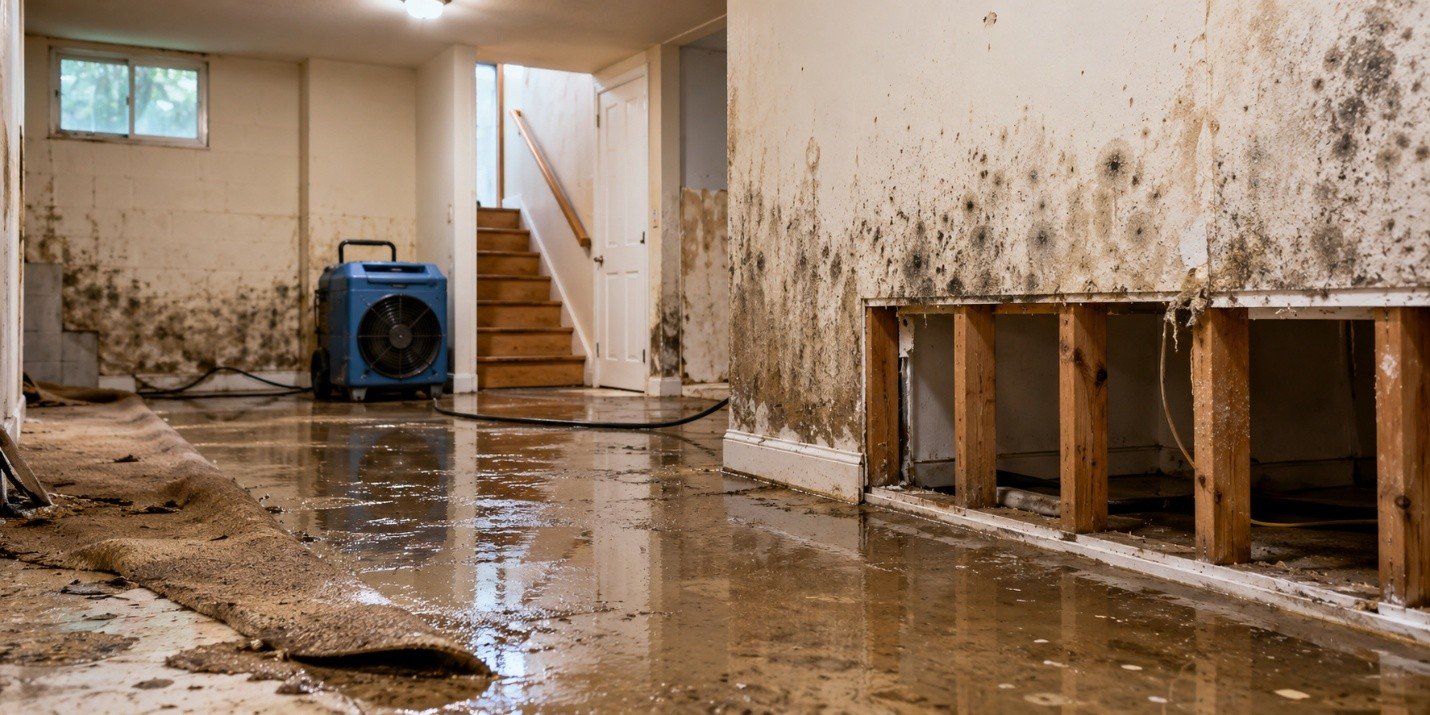
Act fast. Fast action saves your house. It stops serious structural damage in its tracks. Plus, it keeps mold from taking over. Water sneaks into hidden spaces easily. It hides behind drywall and slips under your flooring. You won’t even see the real damage right away.
Don’t rush the actual repairs. Slow down and check everything. Getting rid of the water you can see is only half the battle. You have to inspect all the wet stuff. Smelling something damp? Seeing fresh stains or soft spots? Do not ignore them. Those are big warning signs that moisture is trapped inside.
Immediate Steps to Handle Water Damage Safely
First thing’s first: stay safe. Watch out for shocks. Watch for dirty water and weak floors before stepping downstairs. Storms and broken pipes bring ugly stuff into your house. We’re talking dirt, nasty bacteria, and raw sewage.
Step one: get that standing water out. Step two: get air moving fast. Step three: pull undamaged items away from the mess.
If it’s too much to handle, call in help. Proper Flooded Basement Cleanup focuses on stripping away moisture and getting your space safe again.
Can you save everything? Honest answer? No. It depends on the material and how fast you dry it out. Solid wood tables might make it. Wet carpet padding and porous items? Usually straight to the trash.
Why Mold Develops After Basement Flooding
Mold loves trapped moisture. Give it a warm, wet room and spores multiply like crazy. Basements suffer the most here. They get zero sunlight and barely any air circulation.
Real Basement Mold Removal means tackling the root cause. You have to find where the water comes from, treat the gross spots, and dry everything out. Wiping down visible spots won’t cut it. Mold burrows deep into walls, insulation, and subfloors.
Smell something musty? That’s your early alarm. Keep an eye out for dark stains or humid air after heavy rain. Catching it early saves you thousands.
Caring for Wet Carpet and Damaged Flooring
Carpet acts like a giant, dirty sponge. You have to dry it immediately. Trapped water breeds horrible smells. It breaks down carpet fibers in days. The longer it sits wet, the harder it is to salvage.
Wet Carpet Water Damage wrecks the top surface and the padding underneath. Your carpet might feel dry on top. Meanwhile, the pad underneath is soaking wet. Use proper heavy-duty drying fans and check below the surface. That’s how you decide if it’s saveable or trash.
Don’t throw heavy furniture back onto damp carpet. Give it time. Let the floor dry completely so you don’t ruin your indoor air.
Handling Moisture Issues with Drywall
Drywall and water do not mix. Drywall absorbs water instantly. It swells, turns soft, cracks, and loses all its strength.
Doing a proper Water Damaged Drywall Repair means doing a real check first. Cut out the weak, ruined sections. Dry out the wall studs underneath. Doing this keeps hidden moisture from destroying your new repairs later.
Slapping paint over water stains is tempting. Don’t do it. Painting over water marks just hides the damage for a week or two. Fix the leak first. Then worry about making it look pretty.
How Professional Cleanup Supports Recovery
Major water damage feels overwhelming. Everything is ruined all at once. Having a clear plan helps you figure out what to tackle right now and what can wait.
Companies like Rampage Demolition and Cleaning Services handle the dirty work for you. They clear out wrecked materials, rip out bad flooring, and clean up spaces fast.
Getting pro help takes away the guesswork. You won’t sit there wondering what to tear out and what to save. You just follow a simple recovery plan.
Preventing Future Basement Water Problems
Fixed the damage? Great. Now keep it from happening again. Check your plumbing, gutters, and foundation walls regularly.
Here are simple habits that actually work:
- Clean your gutters so water flows away from the house.
- Fix leaky pipes the second you spot them.
- Run a dehumidifier to keep air dry.
- Crack windows or add fans to boost airflow.
Keep a close eye on spots that flooded before. Quick action stops a small puddle from turning into a full-blown disaster.
Conclusion
Making smart moves after a basement flood saves your home’s structure and cuts down repair costs. Rampage Demolition and Cleaning Services provides the muscle and tools you need for heavy demolition and cleanup. Don’t wait around. Take action on wet carpet, mold, and ruined drywall today so you can get your house back.
Common General Questions
How long does flooded basement cleanup usually take?
The time required depends on the amount of water, the affected materials, and the drying process. Small issues may need limited work, while severe flooding can require more detailed cleanup and repairs.
When should homeowners consider Basement Mold Removal?
Homeowners should consider action when they notice visible mold, musty smells, repeated moisture, or signs of mold growth after flooding. Early attention helps prevent wider spread.
Can wet carpet water damage be repaired without replacement?
Sometimes carpet can recover if professionals dry it quickly and the damage remains limited. Severe saturation, contamination, or long exposure may require replacement for safety reasons.
What does water-damaged drywall repair involve?
The process usually includes checking moisture levels, removing affected sections if necessary, drying the area, and restoring the wall surface after the moisture issue gets resolved.
Is flooded basement cleanup needed after minor water leaks?
Even small leaks can create hidden moisture problems if they remain untreated. A proper evaluation helps determine whether cleanup or drying measures are necessary.
Can basement mold removal prevent future mold problems?
The process can reduce current mold concerns, but preventing future growth requires controlling moisture sources, improving airflow, and maintaining proper humidity levels.
How can water-damaged drywall repair improve basement recovery?
Repairing damaged drywall restores the appearance and function of the space while addressing materials affected by moisture. Proper repair also helps prepare the area for safe use again.
